BärBuddy
AI-Powered Onboarding for Berlin’s Innovation Economy
Bärbody was developed during a high-intensity, week-long hackathon (“Kiez Connect”) initiated by Berlin Partner für Wirtschaft und Technologie. The challenge was released on Monday, with the final concept and pitch due by Friday afternoon.
The brief focused on a systemic problem facing Berlin’s innovation ecosystem: newcomers, including students, freelancers, and migrants, struggle to access economic, technological, and professional opportunities despite having relevant skills and motivation. A mandatory constraint was the inclusion of an AI-assisted workflow integrated into the final solution.
This compressed timeframe required rapid problem framing, early alignment, and pragmatic design decisions focused on feasibility and impact rather than perfection.

Project
BärBuddy
Topic
Service Design & AI Integration
Sector
Civic Tech
Duration
4 Days
Context
Hackathon project · Interdisciplinary team of 5
My Role
UX/UI design, problem framing, chatbot interaction design, pitch structure, cross-disciplinary collaboration
Project Snapshot


My Role & Interdisciplinary Team
This was my first experience working in a highly interdisciplinary team of five, including Data Science, Web Development, and UX/UI Design (my role). Given the extreme time constraints, traditional role boundaries blurred, and collaboration became outcome-driven rather than discipline-driven.
My key contributions included:
Translating the Berlin Partner brief into a clear problem statement and UX framing, supporting early research and validation with the Data Scientist
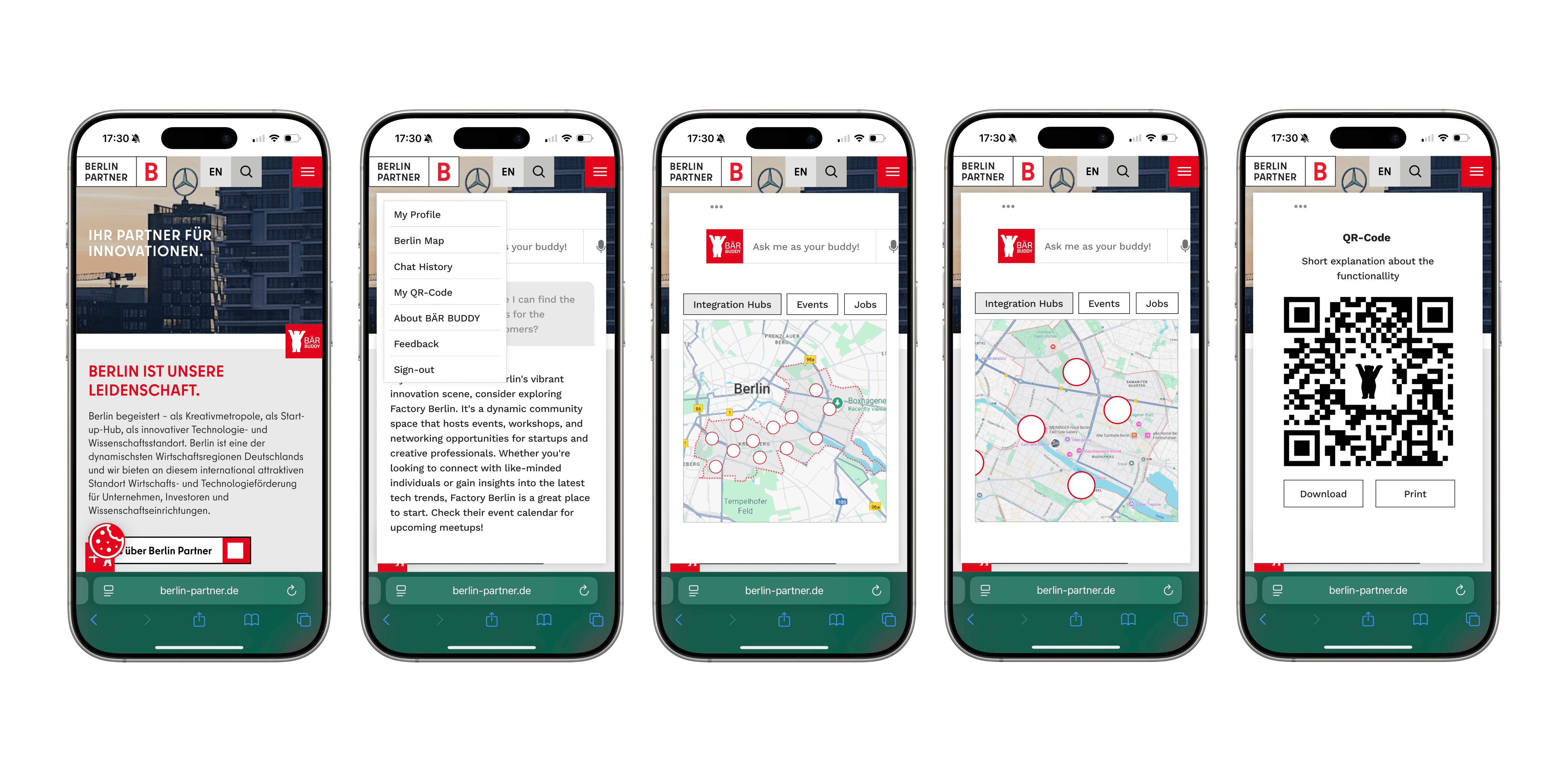
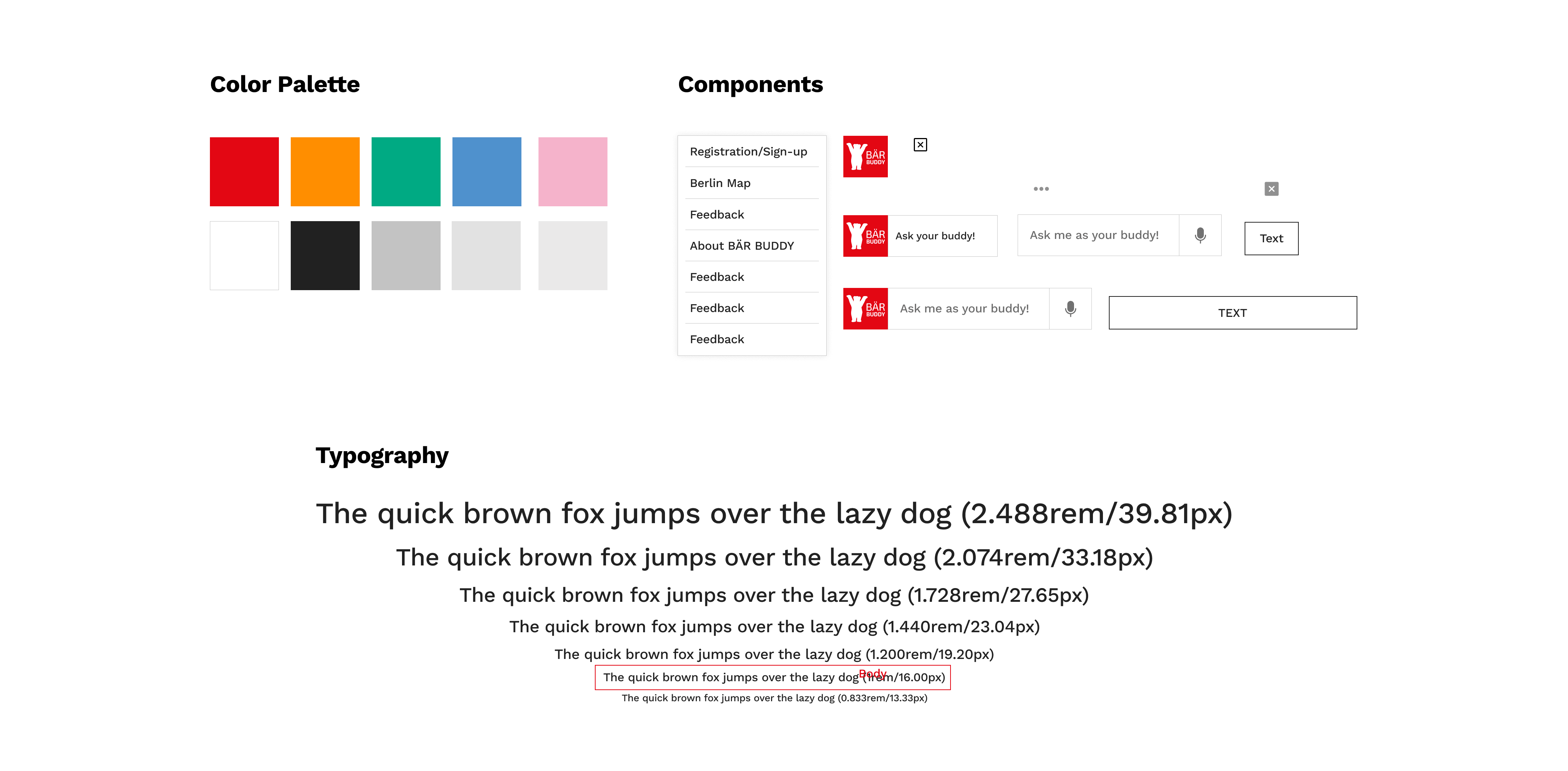
Designing the chatbot interface, conversation flow, and integration touchpoints within the existing Berlin Partner website
Structuring the final pitch narrative and visual logic to communicate a complex, data-driven solution within an 8-minute time limit
This experience strengthened my ability to collaborate across technical domains, align UX decisions with data availability, and adapt design depth based on engineering and AI constraints.
Fragmented Access to Opportunity
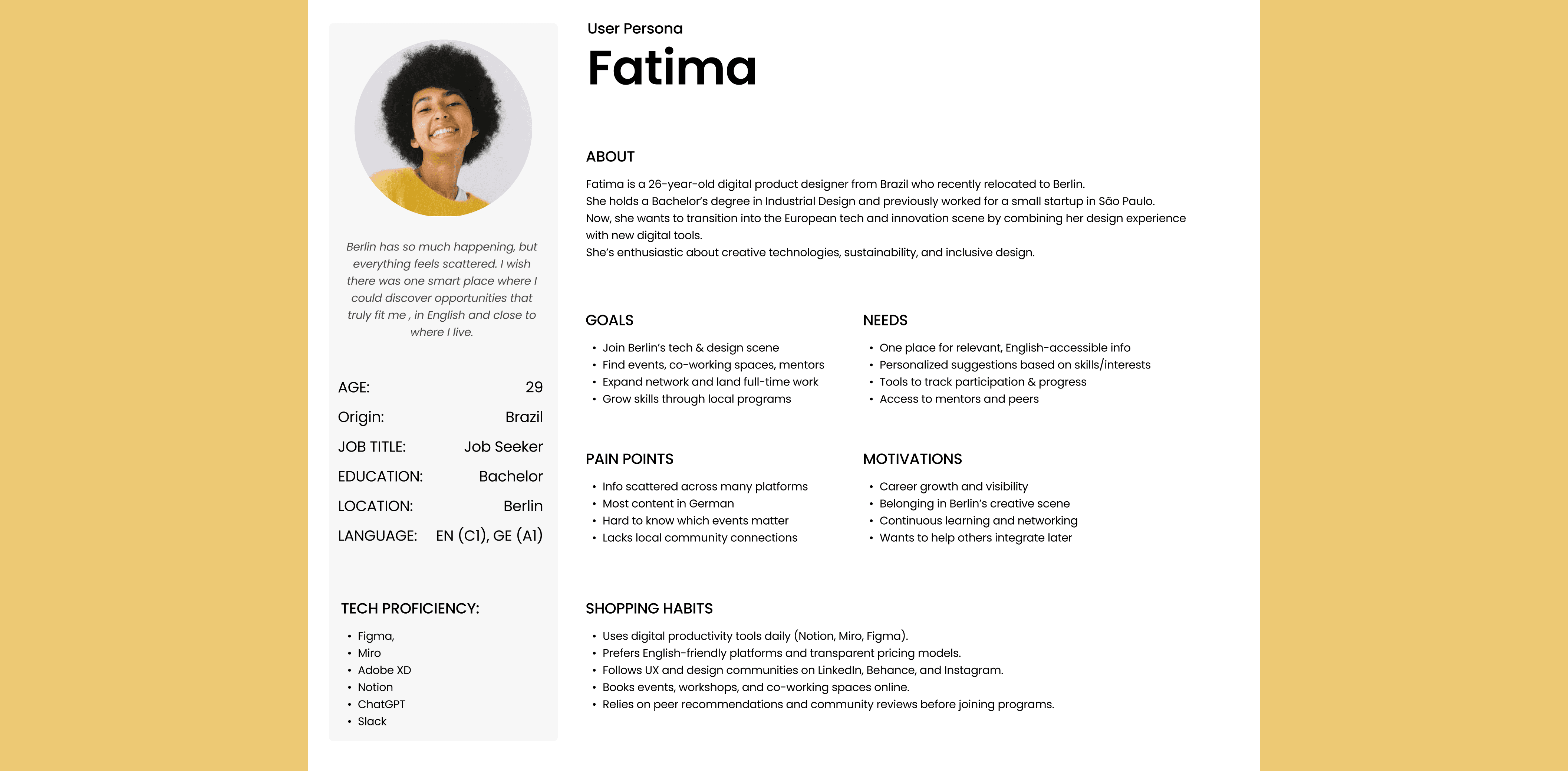
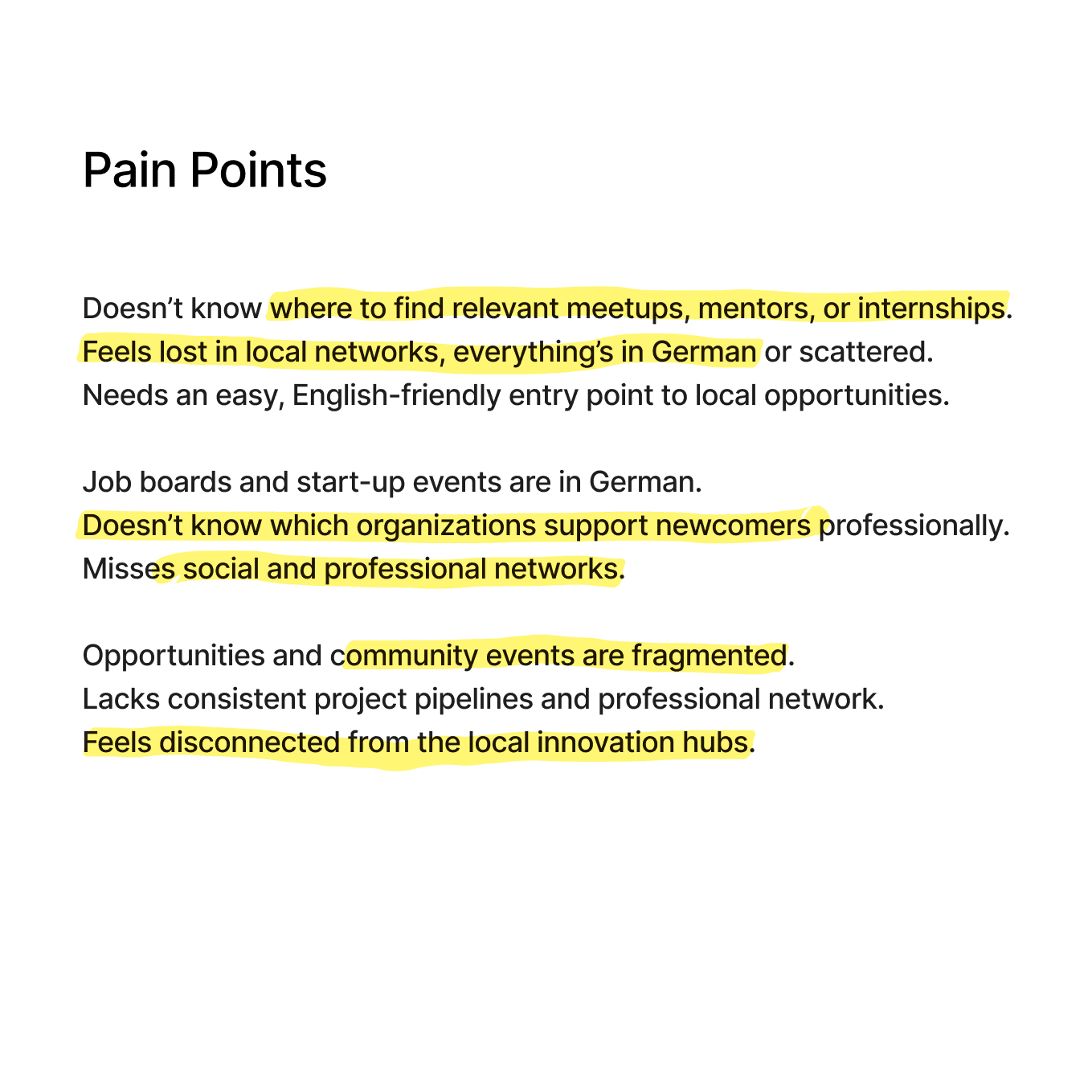
Through brief analysis and early alignment with the challenge owners, we identified a core systemic issue: newcomers to Berlin’s innovation ecosystem lack a clear, personalized entry point.
Key pain points included:
Difficulty discovering relevant hubs, accelerators, funding programs, or upskilling opportunities
Limited visibility into neighborhood-level (Kiez-based) or sector-specific resources
A lack of economic belonging, users felt socially integrated, but professionally disconnected
Rather than designing a new standalone platform, we deliberately chose to integrate our solution into the existing Berlin Partner website. This decision was driven by UX and strategic considerations:
Reduced friction by avoiding another app or registration barrier
Immediate access to trusted, existing content and data infrastructure
Lower implementation cost and faster adoption for a public institution
This integration-first approach allowed us to focus on access, clarity, and personalization instead of platform acquisition.
BärBuddy - An AI Guided Entry Point
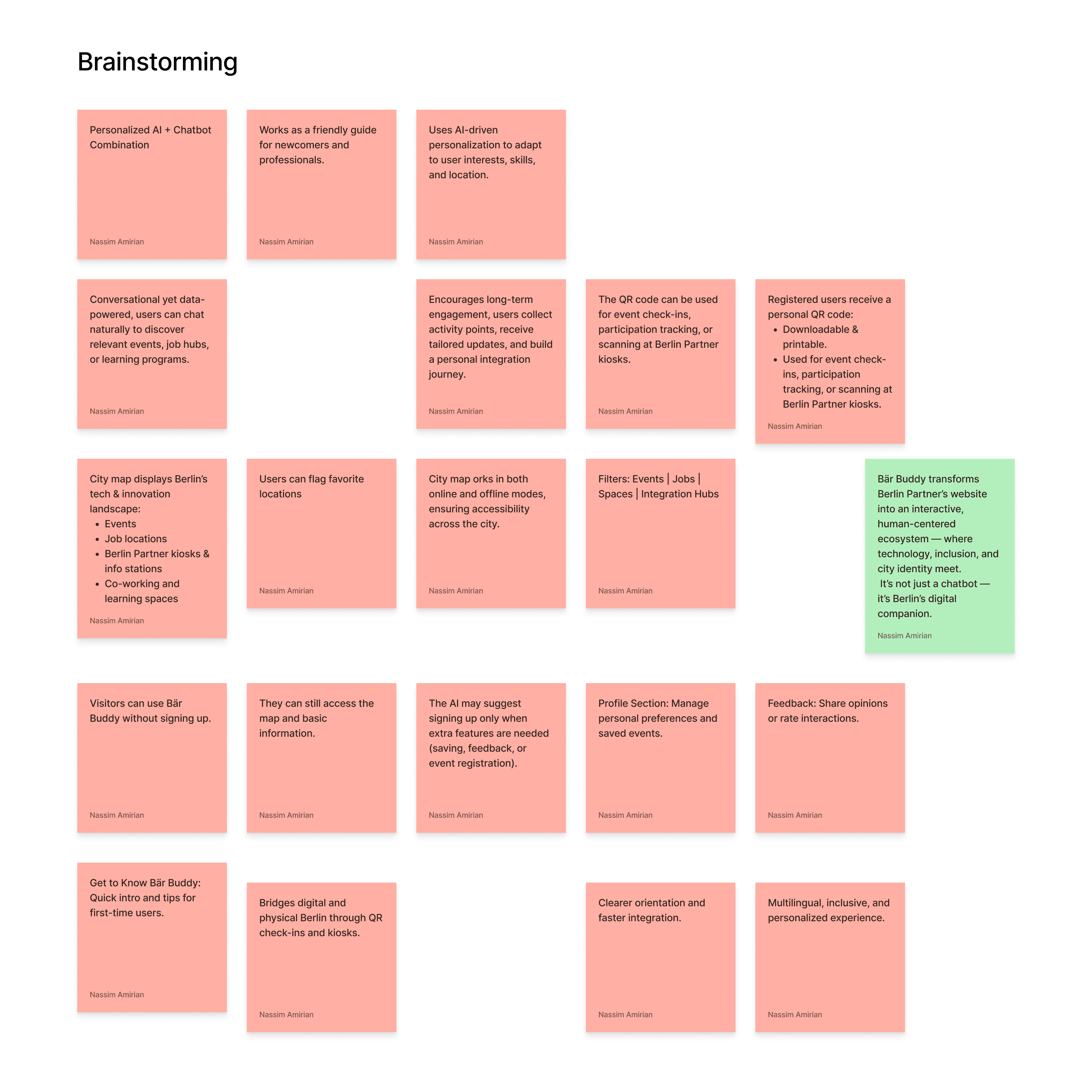
We designed Bärbody, a multilingual AI-powered chatbot embedded directly into the Berlin Partner website. The goal was to create a low-threshold, human-feeling interface that helps users orient themselves within a complex ecosystem.
Key UX principles behind the solution:
Personalization over exploration: users receive tailored recommendations instead of browsing static content
Accessibility by default: multilingual support reduces language barriers for non-German speakers
Progressive disclosure: information is delivered step-by-step to avoid cognitive overload
Bärbody provides:
Personalized recommendations based on background, profession, interests, and language
Context-aware suggestions for events, services, funding opportunities, and programs
Passive, anonymized data collection on user queries, enabling Berlin Partner to identify recurring information gaps
This dual value approach ensured that the solution served both users and the institution, improving user experience while generating actionable insights.
Adapting to the Midweek Twists
The hackathon introduced two major scope changes that required rapid reframing.
Part 2 – From Access to Agency (Tuesday):
The brief expanded from simple access to long-term engagement. We addressed this by positioning Bärbody’s data collection as a feedback loop: aggregated user needs could inform Berlin Partner’s future programs, allowing users to indirectly shape the ecosystem.
Part 3 – Make It Tangible (Thursday):
An offline component was required. We introduced QR codes placed in physical locations such as event flyers, co-working spaces, and community centers. Scanning the code launched the chatbot instantly, bridging physical and digital touchpoints and meeting users at the moment of need.
These pivots reinforced the importance of flexible UX thinking under constraint.
The Value of the Pivot
This project highlighted several senior-level UX principles:
Integration beats reinvention: leveraging existing platforms often delivers more value than building new ones
AI is most effective as a guided interface, not a feature showcase
UX decisions must align with data, feasibility, and institutional constraints
Clear storytelling is as critical as good design when influencing stakeholders
Working under extreme time pressure taught me how to structure problem-solving quickly, collaborate across disciplines, and deliver solutions that are realistic, scalable, and aligned with both user and business needs.