GroMate
Unifying Shared Expenses and Shopping
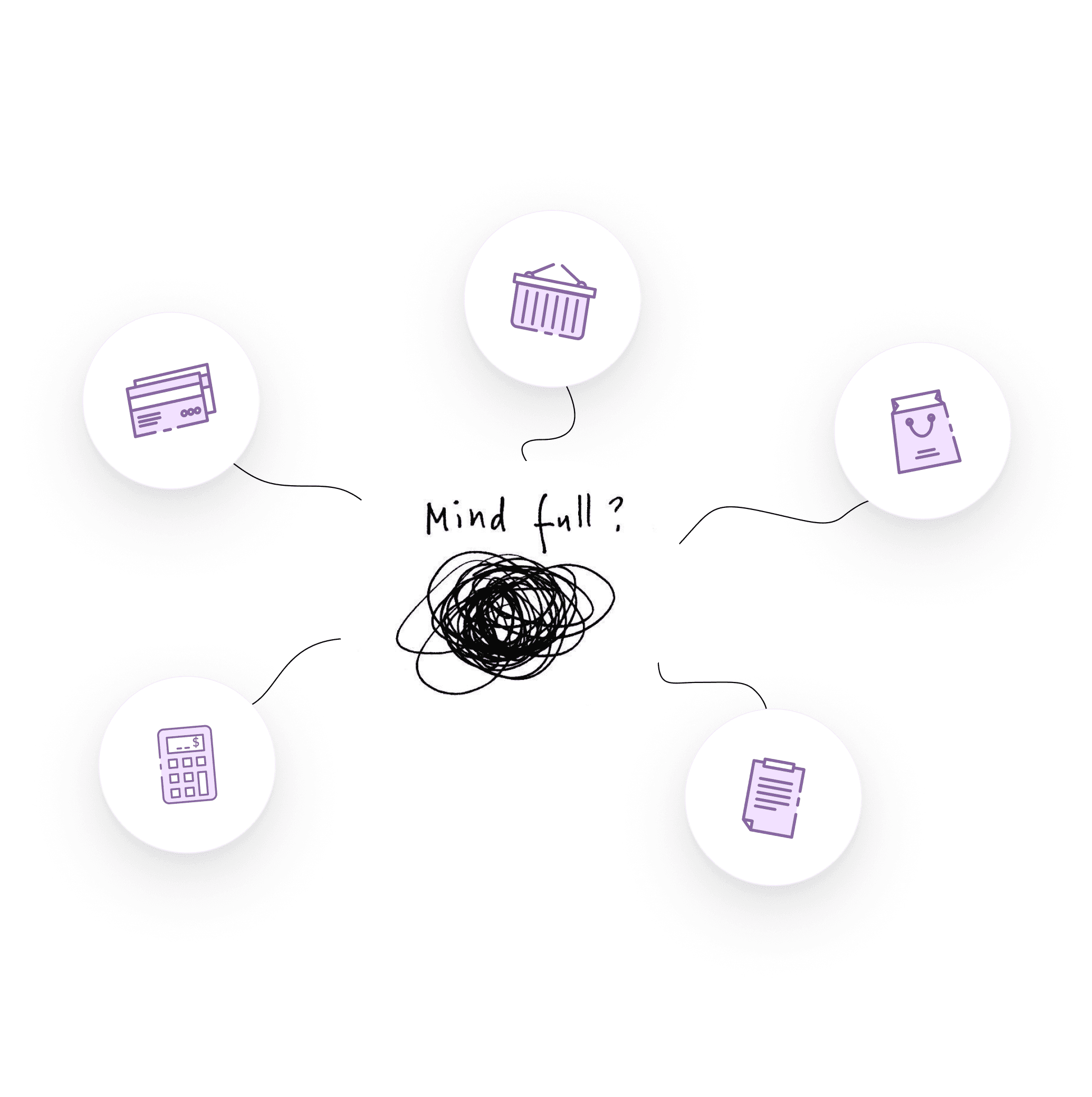
Shared households face a persistent yet underestimated challenge: tool fragmentation. Roommates rely on a mix of messaging apps, notes, and spreadsheets to coordinate shopping and expenses. This disconnected setup leads to forgotten items, duplicate purchases, unclear financial responsibilities, and, ultimately, interpersonal tension.
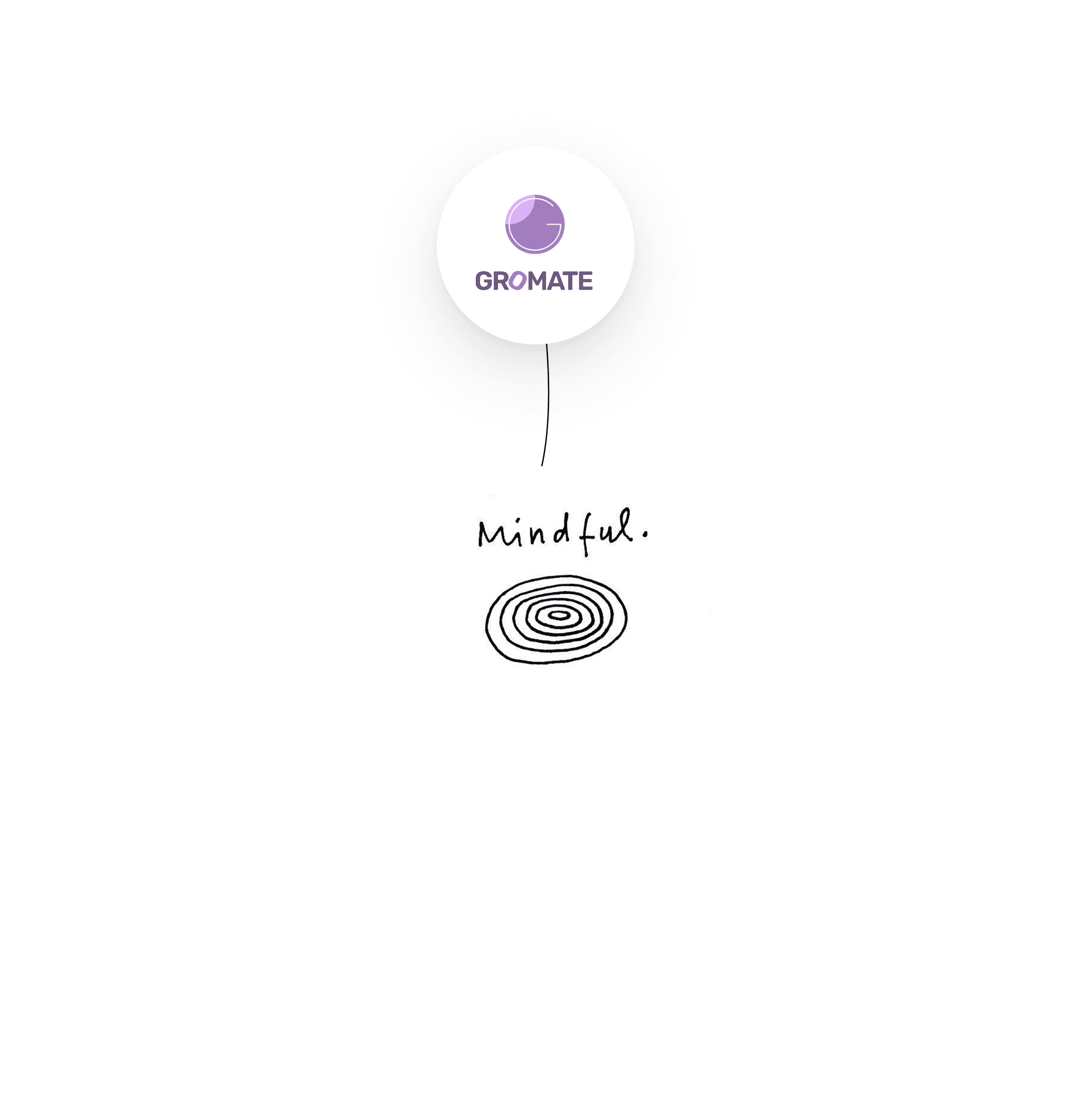
GroMate was designed to address this gap through a centralized, intelligent ecosystem that unifies shared shopping lists with automated expense tracking. By connecting planning, purchasing, and cost settlement into a single flow, GroMate reduces both cognitive load and emotional friction.
The design goal went beyond expense tracking. The focus was on preventing conflict before it occurs by applying behavioral insights, automation, and transparency to everyday financial interactions. The name GroMate (Grocery + Mate) reflects the product’s dual intent: simplifying shared logistics while preserving trust and fairness between roommates.
Project
GroMate
Topic
Behavioral Design
Sector
Fintech
Duration
2 Weeks
Context
Bootcamp project . Solo Designer .
My Role
End-to-end UX/UI designer (research . strategy . interaction design . UI . branding . testing)
Project Snapshot
Wearing Every Hat
As the sole designer, I led the end-to-end digital product design process, maintaining a consistent vision from discovery through delivery. My responsibilities included:
UX Research & Strategy: Designing and conducting surveys, leading in-depth interviews, and analyzing competitor solutions
Ideation & Definition: Independent ideation sessions (Crazy 8s), problem framing, and MVP definition
Prototyping: Translating insights from low-fidelity sketches into structured mid-fidelity flows
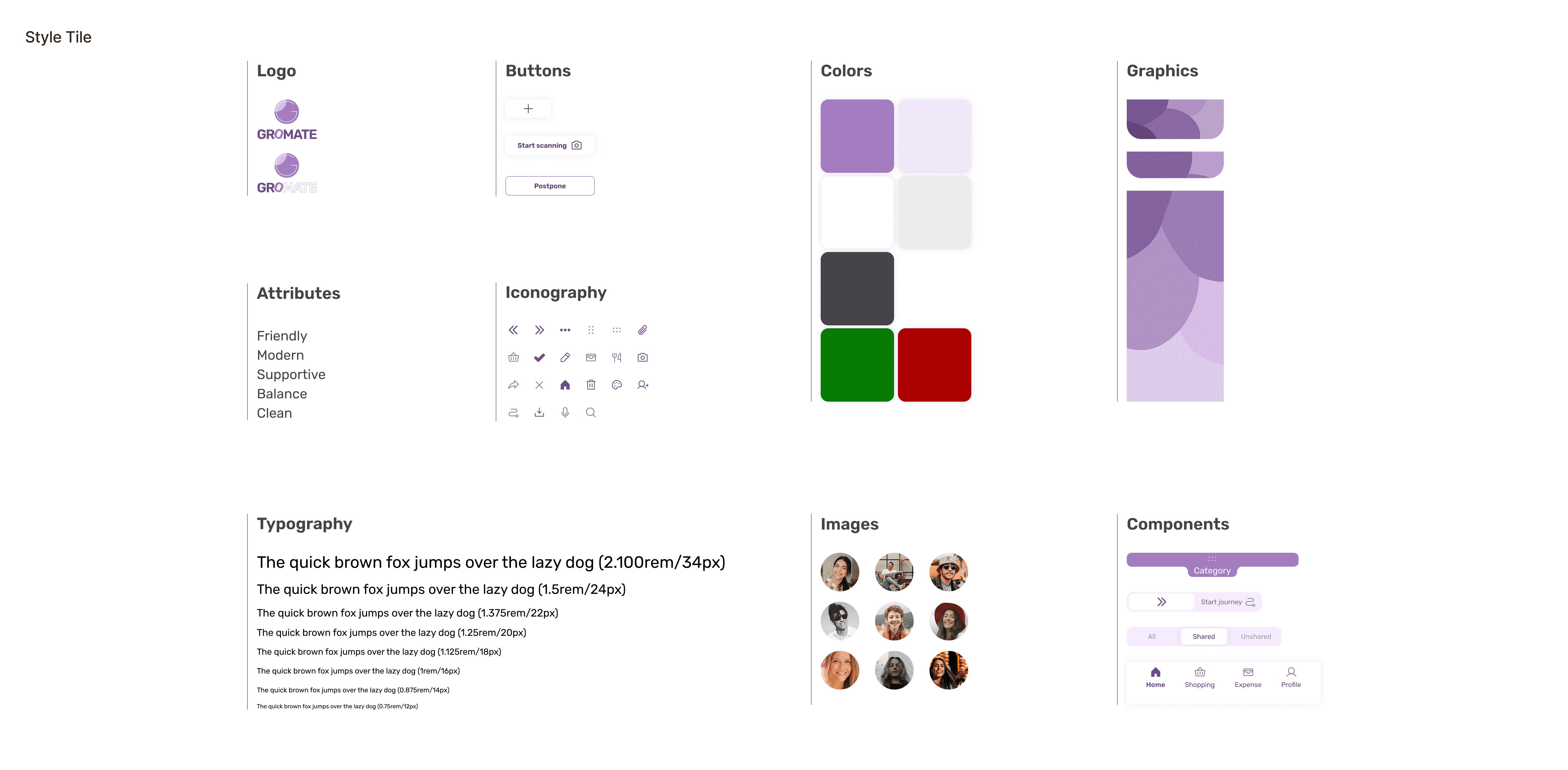
UI Design: Creating the brand identity (logo, color system, typography) and delivering high-fidelity interface designs
Working solo required strong prioritization and disciplined decision-making to ensure that research insights directly informed the final product.
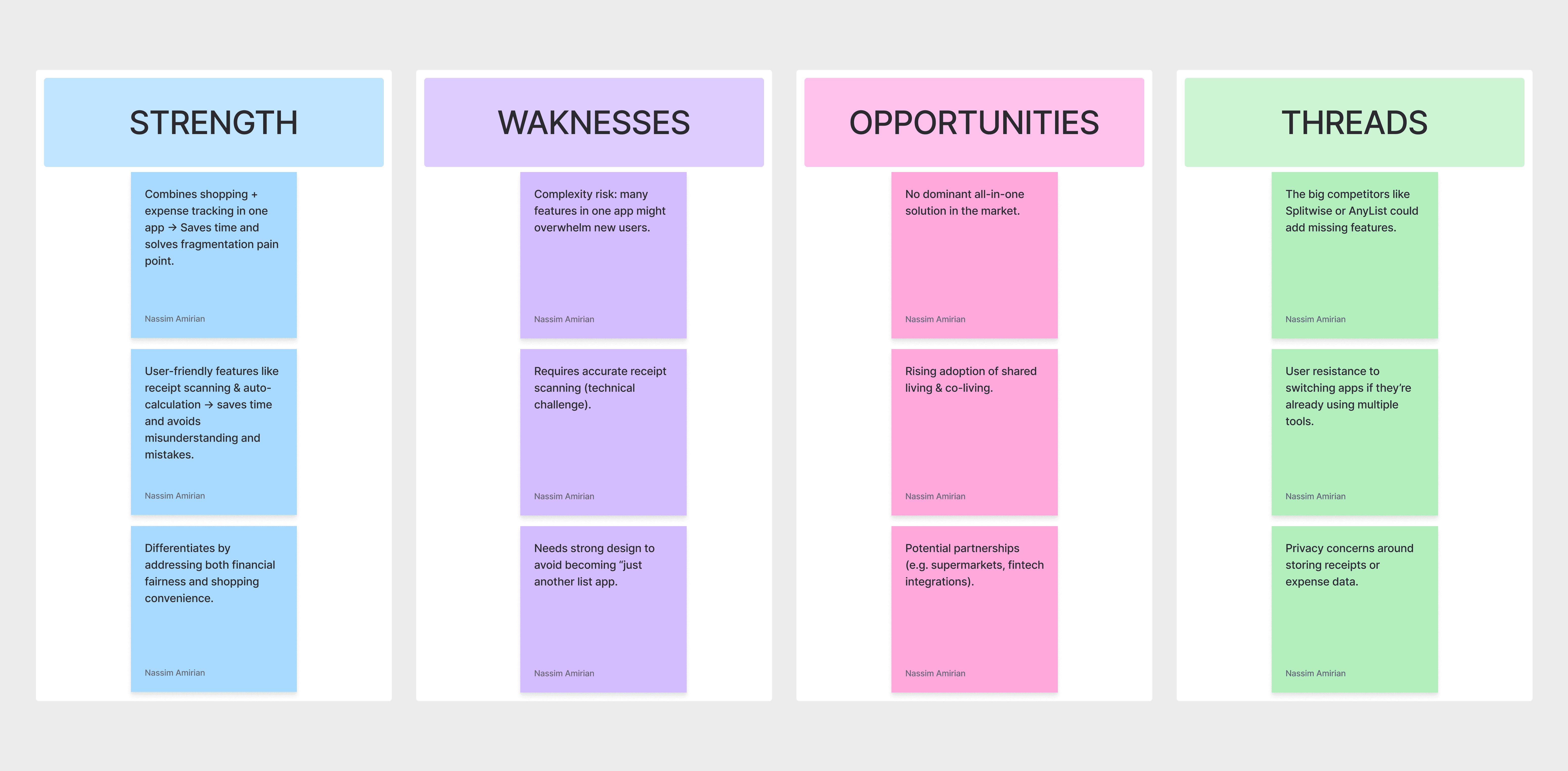
25 Voices, One Common Chaos
Quantitatvie & Qualitative Insights
To ground the solution in real user behavior, I conducted a survey with 25 participants and followed up with in-depth interviews with 3 users. The research revealed several consistent patterns:
Many roommates shared bank accounts or split expenses informally, yet lacked clarity over who purchased what, resulting in financial ambiguity
Users typically shopped 2–3 times per week and often across multiple stores, increasing coordination complexity
Manual expense entry was identified as the primary friction point, leading to forgotten costs and calculation errors
Text-based shopping lists frequently caused misunderstandings, resulting in duplicate purchases or incorrect brands
These insights highlighted that the problem was not a lack of willingness to collaborate, but the absence of a system that supported shared accountability.
The Core Problem
The experience was fundamentally disconnected. There was no system linking the act of shopping with the consequence of paying. This gap created financial imbalance, wasted resources, and social tension within shared households. Existing tools treated shopping and expense tracking as separate activities, despite being part of the same real-world behavior.


Unifying the Fragmented Wallet
How might we create a unified ecosystem that seamlessly connects “planning to buy” with “splitting the bill,” reducing mental load and preventing relationship friction?
GroMate – Your Shopping Buddy
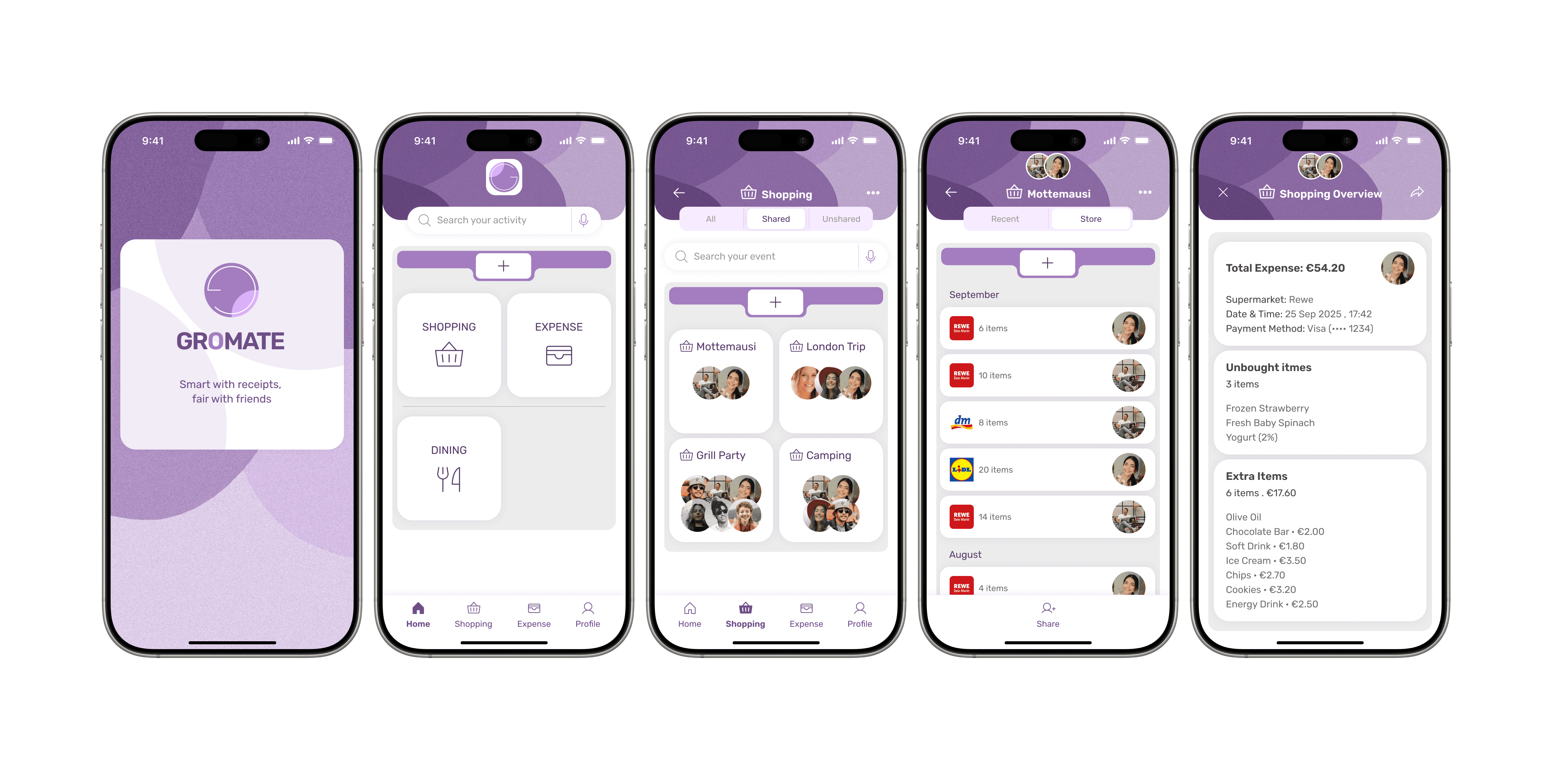
GroMate was designed as an all-in-one application that bridges the gap between the shopping cart and the wallet.
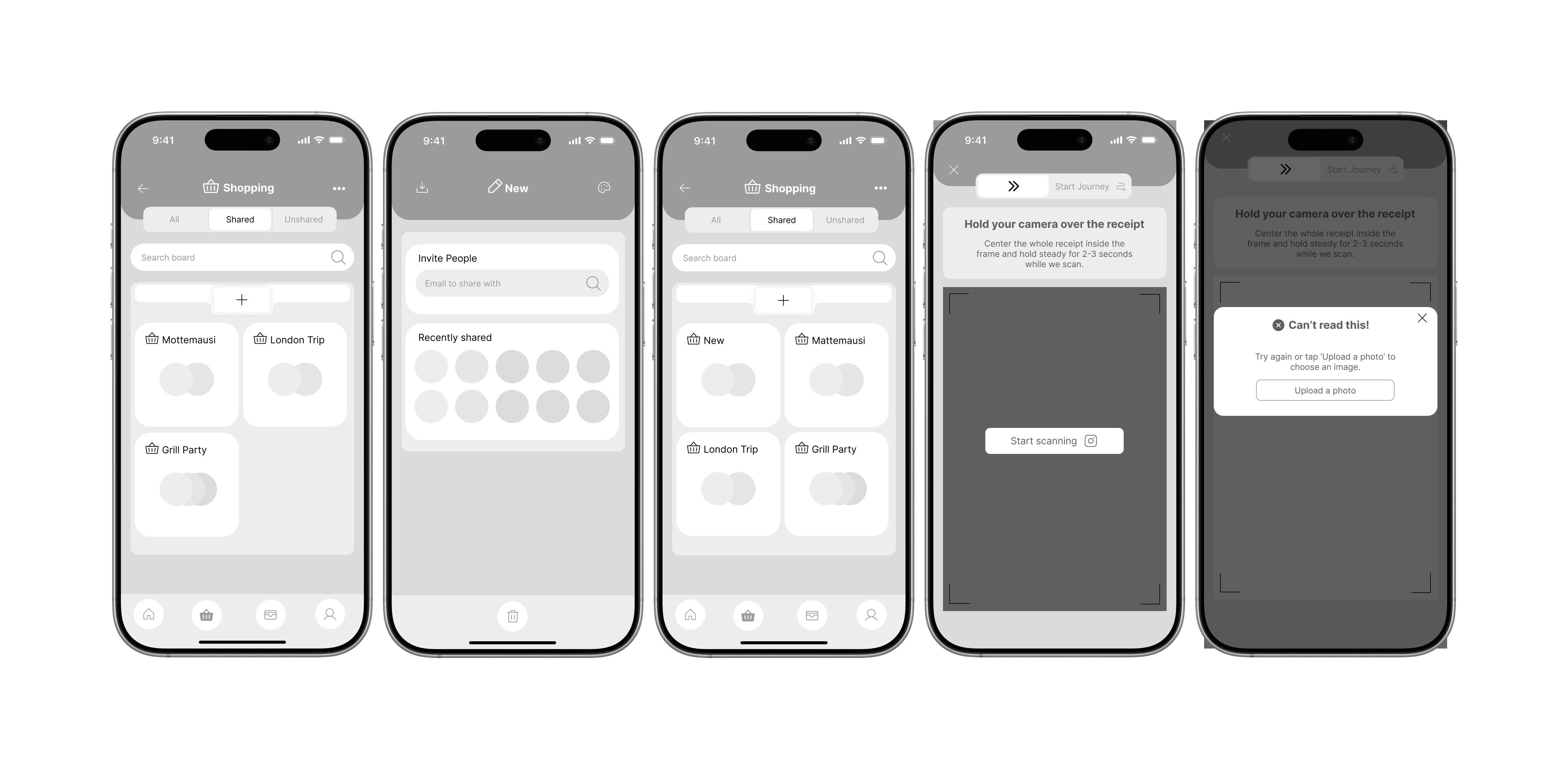
Smart Lists & Store-Aware Structure
Items are automatically grouped according to typical supermarket layouts, reducing cognitive load and unnecessary backtracking
Users can attach photos to specific products, eliminating ambiguity around brands and variants
The "Journey Mode" Experience
When entering a store, users activate Journey Mode, which simplifies the interface and prioritizes fast execution
If a roommate adds an item remotely, the list updates in real time, ensuring requests are not missed
Automated Expense Recognition
Users scan their receipt after checkout
The app matches receipt data with the planned list, identifying unplanned purchases automatically
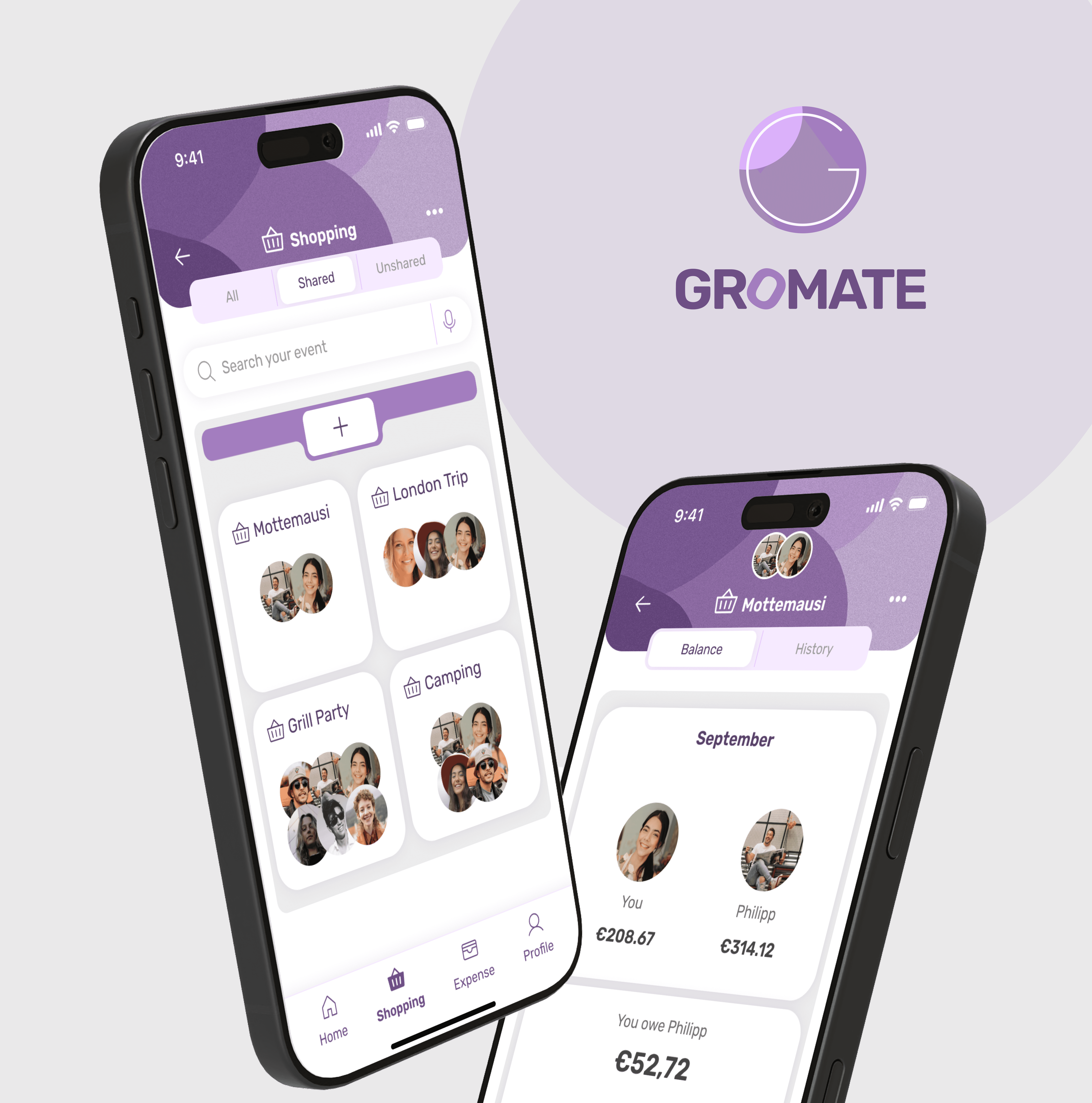
GroMate generates a transparent breakdown of shared versus personal costs, along with spending summaries and trends
This automation removes the need for manual bookkeeping while maintaining financial transparency.
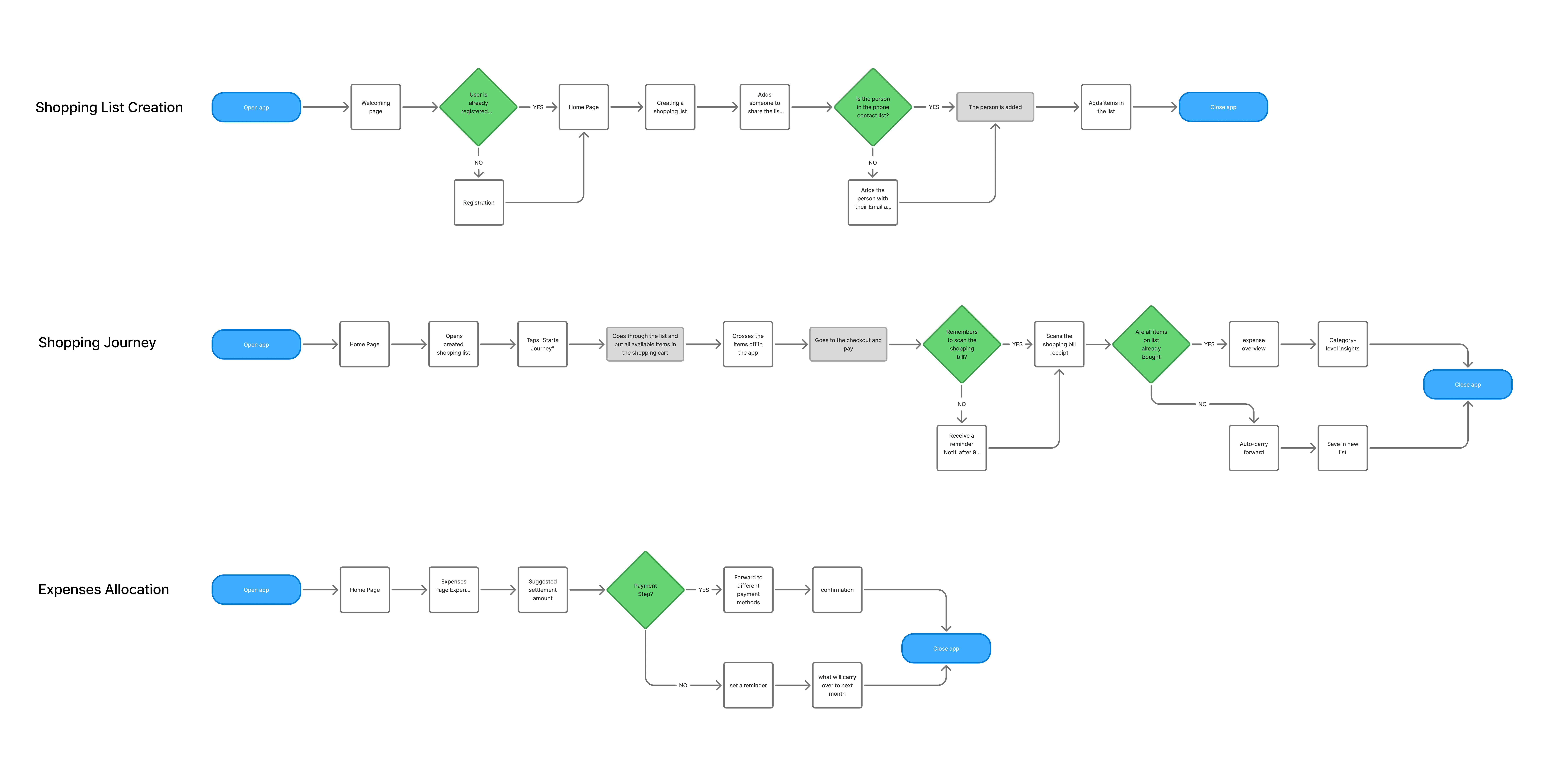
From Crazy 8s to Pixel Perfection
Transitioning from team-based projects to solo work introduced new challenges, particularly around validation and prioritization. To avoid decision paralysis, I relied on structured design methodologies:
Crazy 8s sessions encouraged rapid exploration beyond first ideas
Flow decisions were validated against behavioral insights from interviews
I acted as my own project manager, setting strict UX phase deadlines to protect time for high-fidelity execution
This approach ensured that design decisions were driven by user behavior rather than assumptions.
Demo Day & Validation
The final outcome was a robust, intuitive solution addressing a complex behavioral problem.
Community Demo Day Selection
GroMate was selected as one of the top 8 projects from the entire cohort to be presented at Community Demo Day. I presented the product logic, UX decisions, and visual system to an audience of over 140 participants, including industry professionals. This recognition validated not only the interface quality, but also the depth of research, behavioral reasoning, and system-level UX thinking behind the product.
Lessons from Solo Design
Automation drives adoption: Users switch from simple tools only when friction is actively removed
Context-aware UX matters: Interfaces must adapt to different user states, such as planning at home versus shopping under time pressure
Solo design requires structure: Strong processes and self-discipline are essential to maintain research rigor and design quality